When Sex Hurts and Nobody Believes You: The Vulvodynia Reality Most Doctors Still Aren't Ready For
When Sex Hurts and Nobody Believes You: The Vulvodynia Reality Most Doctors Still Aren't Ready For
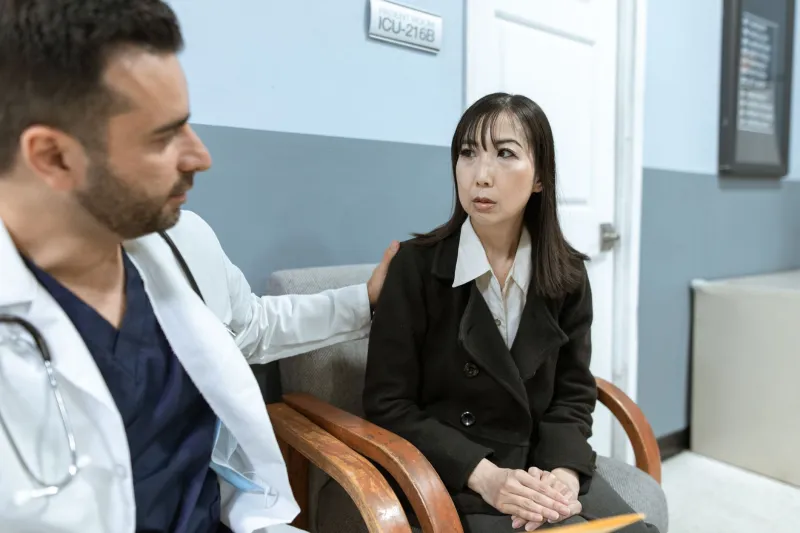
Sarah spent three years being told she was fine.
Three years of burning pain during sex. Three years of sitting on certain chairs being genuinely uncomfortable. Three years of OB-GYN appointments that ended with some version of try more foreplay or maybe see a therapist. It wasn't until she found a pelvic floor physical therapist through a Facebook group — not through her doctor, through a Facebook group — that someone finally named what was happening to her body.
Vulvodynia.
If you've never heard that word, you're not alone. And if you've lived with the condition for years without a diagnosis, you're in painfully crowded company.
So What Actually Is Vulvodynia?
Vulvodynia is chronic vulvar pain that lasts three months or longer and has no clearly identifiable cause — meaning no infection, no skin condition, no obvious structural issue. The pain can be constant or intermittent, localized to one spot (like the vaginal opening, which is called vestibulodynia or vulvar vestibulitis) or spread across the entire vulvar region. It often feels like burning, stinging, rawness, or a sensation that's been described as sitting on a lit match.
According to the National Vulvodynia Association, somewhere between 6 and 16 percent of women in the US experience vulvodynia symptoms at some point — that's potentially millions of people. Yet a 2003 study found that over 60 percent of women with the condition had visited three or more healthcare providers before receiving a diagnosis. Many were told their pain was psychosomatic. Some were prescribed antidepressants as a first-line response. Others were simply sent home.
This is not a niche problem. It's a systemic failure.
The Long, Ugly History of Gaslighting Vulvar Pain
Women's pain has a documented credibility problem in American medicine. Studies consistently show that women are less likely than men to receive adequate pain treatment, more likely to have their symptoms attributed to psychological causes, and more likely to wait longer in emergency rooms before being seen. Vulvodynia sits at the intersection of all of that bias, and then adds the layer of it involving genitals — which somehow still makes a lot of clinicians visibly uncomfortable.
For decades, vulvodynia was classified as a psychosomatic condition. The logic — if you can call it that — was essentially: we can't find a cause, therefore it must be in your head. It wasn't until 2015 that the International Society for the Study of Vulvovaginal Disease updated its classification to acknowledge the condition's multifactorial nature, recognizing that neurological, hormonal, inflammatory, genetic, and yes, psychological factors can all play a role — without any one of them being the whole story, and without psychological distress being a cause rather than an understandable result of living in chronic pain.
That distinction matters enormously. Anxiety and depression are common in people with vulvodynia. That's what happens when your body hurts and nobody believes you.
The Diagnosis Problem Nobody Wants to Talk About
Part of why vulvodynia gets missed is that it doesn't show up on standard tests. A swab comes back normal. A visual exam looks unremarkable. So providers move on. What should happen — and what's outlined in clinical guidelines that many practitioners haven't read or don't follow — is a Q-tip test, where light pressure is applied to specific points around the vulva to map pain response. It takes about two minutes. It's not complicated. And it remains wildly underutilized in routine gynecological care.
If you suspect you might have vulvodynia, it's worth explicitly asking your provider to perform a vulvar pain mapping exam. You are allowed to advocate for this. You are allowed to name the condition and ask whether it fits your symptoms. If your current provider dismisses you, finding a practitioner who specializes in vulvovaginal disorders — through the NVA's provider directory or through pelvic floor PT referral networks — is a completely reasonable next step.
What Treatment Actually Looks Like (It's Not One-Size-Fits-All)
Here's where things get genuinely hopeful: treatment for vulvodynia has come a long way, even if access to that treatment remains uneven. The current approach is multimodal, meaning it usually involves more than one intervention, tailored to the individual.
Pelvic floor physical therapy is increasingly considered a cornerstone treatment, particularly for provoked vestibulodynia (pain triggered by touch or penetration). The pelvic floor muscles in people with vulvodynia are often hypertonic — chronically tight — which amplifies pain signals. A skilled pelvic floor PT can work to release that tension through internal and external manual therapy, biofeedback, and home exercise programs. Results aren't instant, but the evidence base is solid and growing.
Topical treatments are another major category. Compounded topical lidocaine or estradiol/testosterone creams are commonly prescribed, often by gynecologists or dermatologists who specialize in vulvar conditions. These can reduce localized pain and, in the case of hormonal preparations, address atrophic changes that sometimes contribute to sensitivity.
Oral medications — including tricyclic antidepressants like amitriptyline and anticonvulsants like gabapentin — are used not for their psychiatric effects but because they modulate nerve pain signaling. This is a legitimate, evidence-based use of these drugs, and it's worth knowing that being prescribed one of them for vulvodynia doesn't mean your doctor thinks it's all in your head. It means your nerves are misfiring and these medications can help recalibrate that.
The low-oxalate diet gets brought up frequently in vulvodynia communities, and the evidence here is genuinely mixed. The theory is that high-oxalate foods (spinach, nuts, chocolate, certain berries) can irritate vulvar tissue in sensitive individuals. Some people report real relief from dietary changes. Controlled studies haven't been able to confirm this broadly. It's not harmful to try, but it's also not a proven cure — and anyone selling it as such deserves skepticism.
Cognitive behavioral therapy and sex therapy aren't admissions that the pain isn't real — they're tools for managing the very real psychological toll of chronic pain and for rebuilding a relationship with your body and your sexuality that chronic pain tends to corrode. Many people find them useful as part of a larger treatment plan.
Surgery, specifically a vestibulectomy, is an option for localized vestibulodynia that hasn't responded to other treatments. It has a reasonably good evidence base for carefully selected patients, but it's typically considered after other approaches have been tried.
You Deserve to Not Be in Pain
That sounds almost too simple to say. But given how many people with vulvodynia have been dismissed, minimized, and sent home without answers, it feels worth saying plainly.
Chronic vulvar pain is not your fault. It is not a personality flaw. It is not evidence that you have hang-ups about sex or that you're not trying hard enough. It is a medical condition with real physiological underpinnings and real, if imperfect, treatment options.
If you've been living with unexplained burning, stinging, or pain during sex or everyday activities, please know that a name for what you're experiencing exists — and that name comes with a community, a growing body of research, and providers who actually know how to help.
You don't have to keep white-knuckling through it alone.
Resources: The National Vulvodynia Association (nva.org) maintains a provider directory and extensive patient education materials. The International Society for the Study of Vulvovaginal Disease (issvd.org) publishes clinical guidelines. Pelvic floor PT referrals can often be found through the Academy of Pelvic Health Physical Therapy (pelvicrehab.com).