When Your Body Won't Cooperate: The Medications and Health Conditions Quietly Killing Your Orgasms
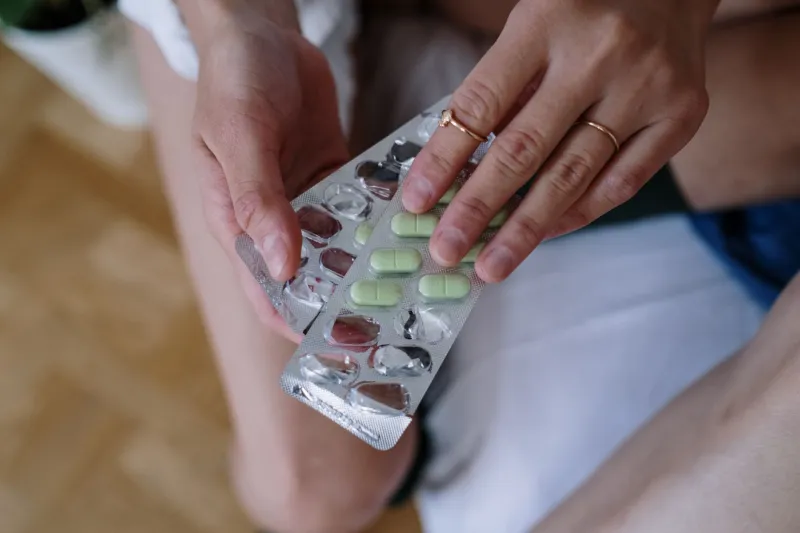
Let's set the scene. You're on an antidepressant that genuinely changed your life. Or you've been managing your thyroid condition for years. Or you're on hormonal birth control because the alternative is worse. Life is more manageable. You feel more functional. And then, quietly, you realize that sex — which used to feel like something — now feels like a lot of effort for very little payoff. Orgasms that used to come easily now require a heroic amount of work, or don't come at all.
This is not in your head. And it's not a sign that something is fundamentally broken about you. It's a side effect — one that's dramatically underreported, underdiagnosed, and underaddressed in clinical settings.
Here's the honest breakdown of what's hijacking your pleasure, and more importantly, what you can actually do about it.
SSRIs and SNRIs: The Pleasure Tax on Mental Health Treatment
Selective serotonin reuptake inhibitors (SSRIs) — think sertraline (Zoloft), fluoxetine (Prozac), escitalopram (Lexapro) — are among the most commonly prescribed medications in the United States. They work by increasing serotonin availability in the brain, which helps regulate mood. The problem? Serotonin and dopamine have a complicated relationship, and flooding the system with serotonin tends to suppress dopamine — which is deeply involved in desire, motivation, and the reward circuitry that makes orgasm feel like something worth pursuing.
The result is a cluster of effects that researchers now call Sexual Dysfunction Associated with Antidepressants (SSAD): reduced libido, delayed or absent orgasm, genital numbness, and difficulty with arousal. Studies suggest this affects anywhere from 30% to 70% of people on SSRIs, depending on the medication and the study. That's not a rare side effect. That's a near-majority.
SNRIs like venlafaxine (Effexor) and duloxetine (Cymbalta) carry similar risks.
What actually helps:
- Timing adjustments: Some people find that taking their SSRI after sex (rather than before) reduces the acute dampening effect. This works better for medications with shorter half-lives.
- Medication switches: Bupropion (Wellbutrin) works on dopamine and norepinephrine rather than serotonin, and has a notably better sexual side effect profile. It's sometimes added to an SSRI regimen specifically to counteract sexual dysfunction. Mirtazapine is another option with lower sexual side effect rates. These conversations are worth having with your prescriber.
- Buspirone: An anti-anxiety medication that some research suggests can partially reverse SSRI-induced sexual dysfunction when added to a treatment regimen.
- Vibration: This sounds simple, but direct vibration stimulation — particularly with a device designed for the purpose — can reach nerve endings in ways that overcome the numbing effect. Many people on SSRIs find that vibration is the difference between orgasm and no orgasm.
Hormonal Birth Control: The Conversation That's Still Not Happening Enough
Combined hormonal contraceptives (the pill, patch, ring) suppress ovulation by keeping estrogen and progesterone artificially regulated. They also — in many formulations — raise sex hormone-binding globulin (SHBG), a protein that binds to free testosterone and makes it unavailable to your tissues. Less free testosterone = reduced genital sensitivity, reduced libido, and for many people, a significant dampening of sexual response.
Studies have found that SHBG levels can remain elevated for months after stopping hormonal birth control — a phenomenon sometimes called "post-pill sexual dysfunction" that can be deeply confusing for people who don't know it's a thing.
Not everyone experiences this. Some people do fine. But if your sexual response changed after starting hormonal contraception, that's a real and documented phenomenon, not anxiety or imagination.
What actually helps:
- Progestin type matters: Different progestins have different androgenic profiles. Some are more anti-androgenic (like drospirenone, found in Yaz and Yasmin) and may be more likely to suppress sexual response. Others are less so. A conversation with your OB-GYN about switching formulations is reasonable.
- Non-hormonal options: Copper IUDs provide highly effective contraception without hormonal interference. If sexual dysfunction is significantly affecting your quality of life, it's worth weighing the trade-offs.
- Time: If you've recently stopped hormonal birth control and are experiencing reduced sensation, give it several months. SHBG levels do normalize, though the timeline varies.
Thyroid Conditions: The Great Masquerader
Your thyroid regulates metabolism, energy, and a surprising number of processes that touch sexual function. Both hypothyroidism (underactive) and hyperthyroidism (overactive) can affect libido and orgasm.
Hypothyroidism in particular is associated with reduced sexual desire, difficulty reaching orgasm, and vaginal dryness — symptoms that overlap so thoroughly with depression and stress that the thyroid connection often goes uninvestigated. Research has found that treating hypothyroidism can significantly improve sexual function in people who were previously undertreated or undiagnosed.
What actually helps:
- Optimizing your levels, not just normalizing them: TSH within "normal" range doesn't mean you're optimally treated. Some people feel and function significantly better with TSH in a lower part of the normal range. Push for a conversation about your specific numbers, not just whether you're "in range."
- T3 vs. T4: Most prescribers use levothyroxine (T4 only). Some patients do better with combination T4/T3 therapy. This is a contested area in endocrinology, but it's worth raising if you're still symptomatic on standard treatment.
Diabetes and Sexual Response
Diabetes affects sexual function through two main mechanisms: neuropathy (nerve damage) and vascular changes (reduced blood flow). Both are directly relevant to genital sensation and arousal.
Peripheral neuropathy can reduce sensitivity in genital tissue — the same process that causes numbness in the feet affects nerve endings elsewhere. Reduced blood flow means the engorgement response that underlies arousal and lubrication is impaired. People with diabetes also have higher rates of vaginal dryness and increased susceptibility to yeast infections, both of which make sex less comfortable.
What actually helps:
- Tight glycemic control: This is the most evidence-backed intervention. Better blood sugar management slows the progression of both neuropathy and vascular damage.
- Pelvic floor physical therapy: Can help address some of the muscular and circulatory components of sexual dysfunction.
- Lubrication: Non-negotiable for anyone experiencing dryness. Water-based or silicone-based lubricants make a real difference in comfort and, consequently, in pleasure.
Other Common Culprits Worth Knowing
Antihistamines: Drying agents by design — they reduce mucous membrane secretions everywhere, including in the vagina. Chronic antihistamine use can contribute to dryness and reduced arousal.
Beta-blockers: Used for blood pressure and heart conditions, these can reduce blood flow to the genitals and blunt the physiological arousal response.
Opioids: Long-term opioid use suppresses testosterone production significantly, affecting desire and orgasm capacity.
Antipsychotics: Many work by blocking dopamine receptors — which, as we covered with SSRIs, is a direct hit to the pleasure and reward pathways.
Having the Conversation With Your Provider
Here's the frustrating reality: many healthcare providers don't ask about sexual side effects, and many patients don't volunteer the information because it feels embarrassing or tangential. It is not tangential. Sexual function is a legitimate component of quality of life, and you're allowed to name it as a priority.
Come prepared with specifics: when the change started, how it manifests, and what you've already tried. Ask explicitly: "Are there alternative medications with a better sexual side effect profile?" or "Could my [condition] be affecting my sexual response, and if so, is my treatment optimized for that?"
You might not get a perfect answer. But you'll get further than if you never ask.
The Bottom Line
Your orgasm isn't a luxury or a bonus. It's a normal part of your physical and emotional health, and when it's being systematically undermined by something you're taking or managing for another condition, that's a problem worth solving. Not every solution is perfect. Some involve trade-offs. But more options exist than most people know — and most of them start with a conversation you haven't had yet.